One question to carry into your next decision
What do we actually know — and what are we interpreting?

Drive Innovation, Light Change

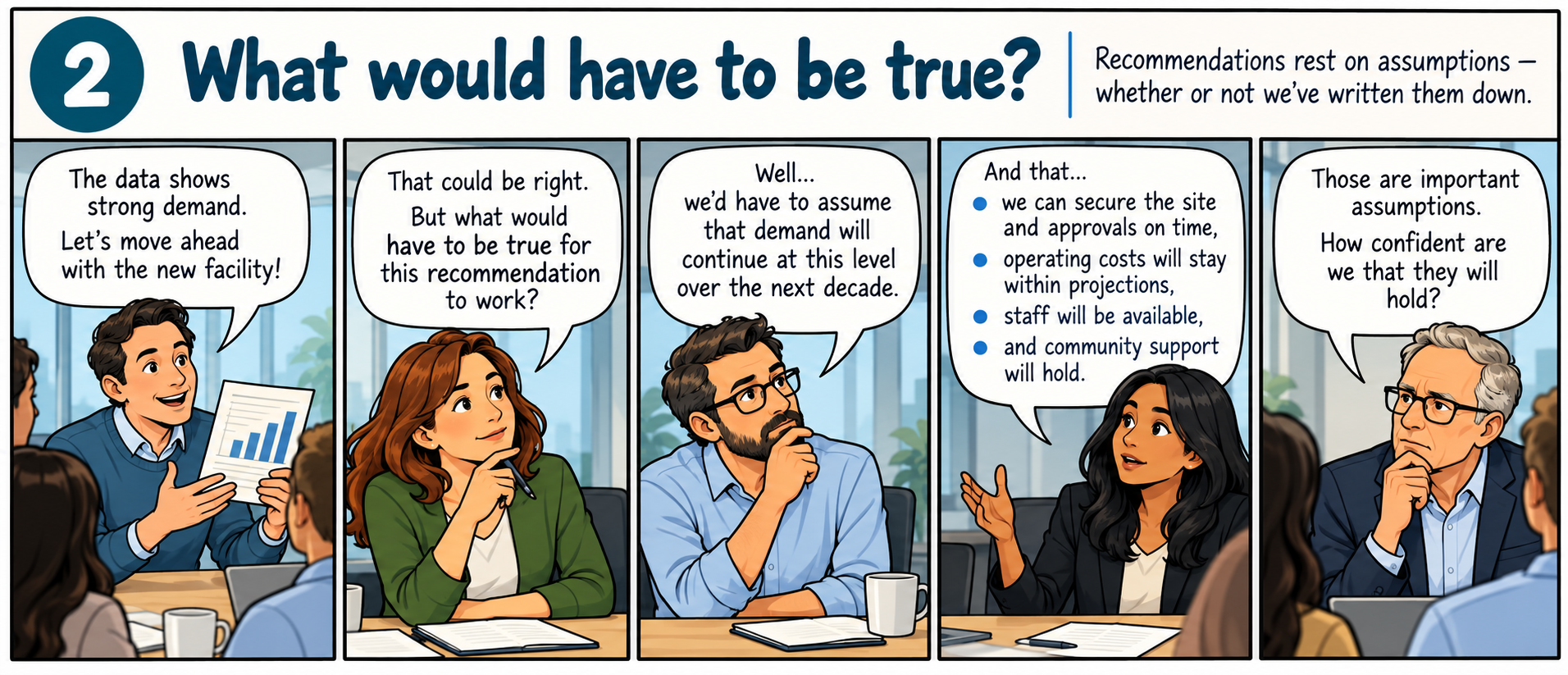
Organizations invest heavily in expertise, data and processes intended to support better decisions. Yet between the evidence in front of us and the action we ultimately take, something else happens.
We interpret. We make assumptions. We decide which explanations seem plausible. We place confidence in recommendations.
Much of that reasoning happens quickly — and almost invisibly.
Evidence-Informed Organizational Reasoning (EIOR) helps people get better at what happens in that space.
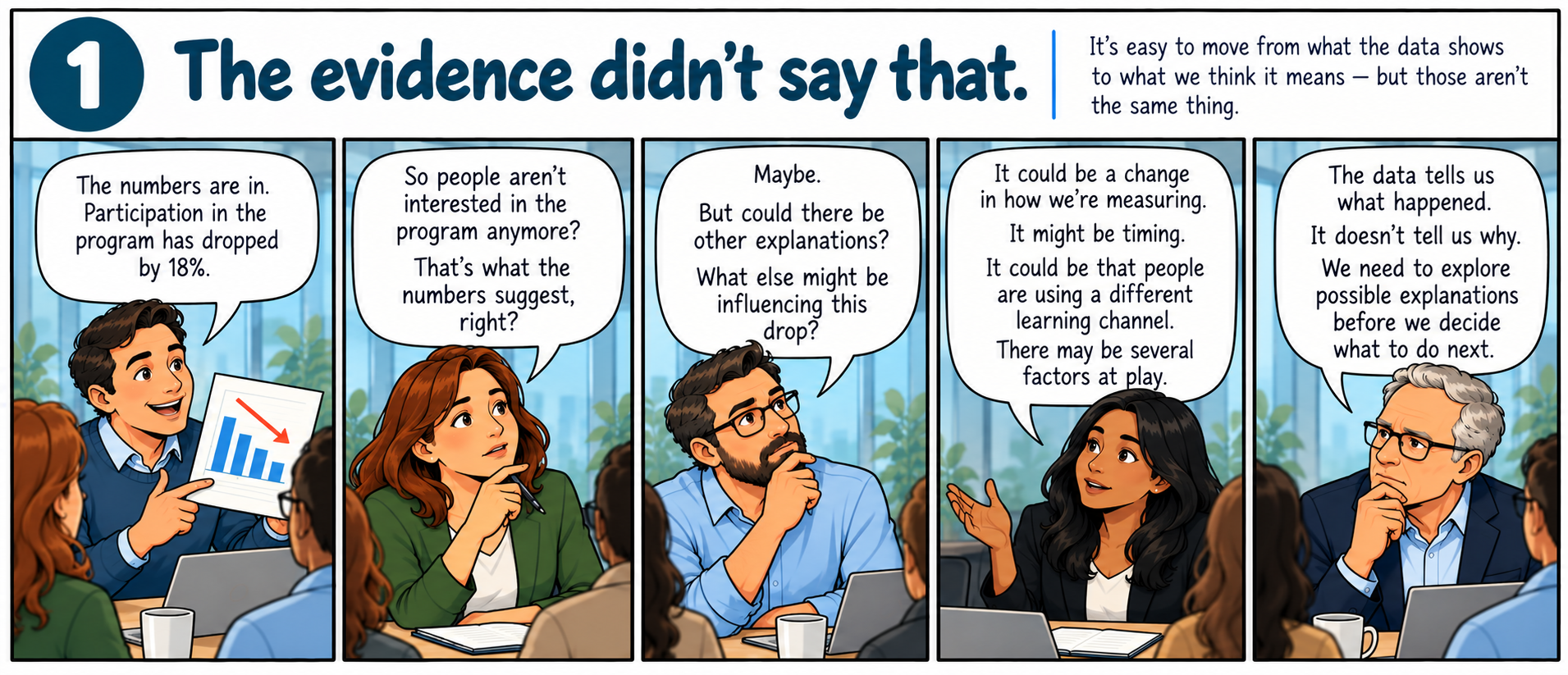
Imagine that participation in a program falls by 18%.
One person sees evidence that the program is losing relevance. Another suspects an access problem. Someone else wonders whether promotion has failed.
Same number. Different explanations. The evidence hasn't changed. The reasoning has.
That space can be thought about as a progression:
Question → Evidence → Observation → Interpretation → Assumption → Insight → Recommendation → Judgment
EIOR makes that reasoning more visible, so it can be examined, challenged and improved.
You don't need to become an analyst to reason more deliberately. Often, a better question at the right moment is enough to expose something worth examining.
What do we actually know — and what are we interpreting?
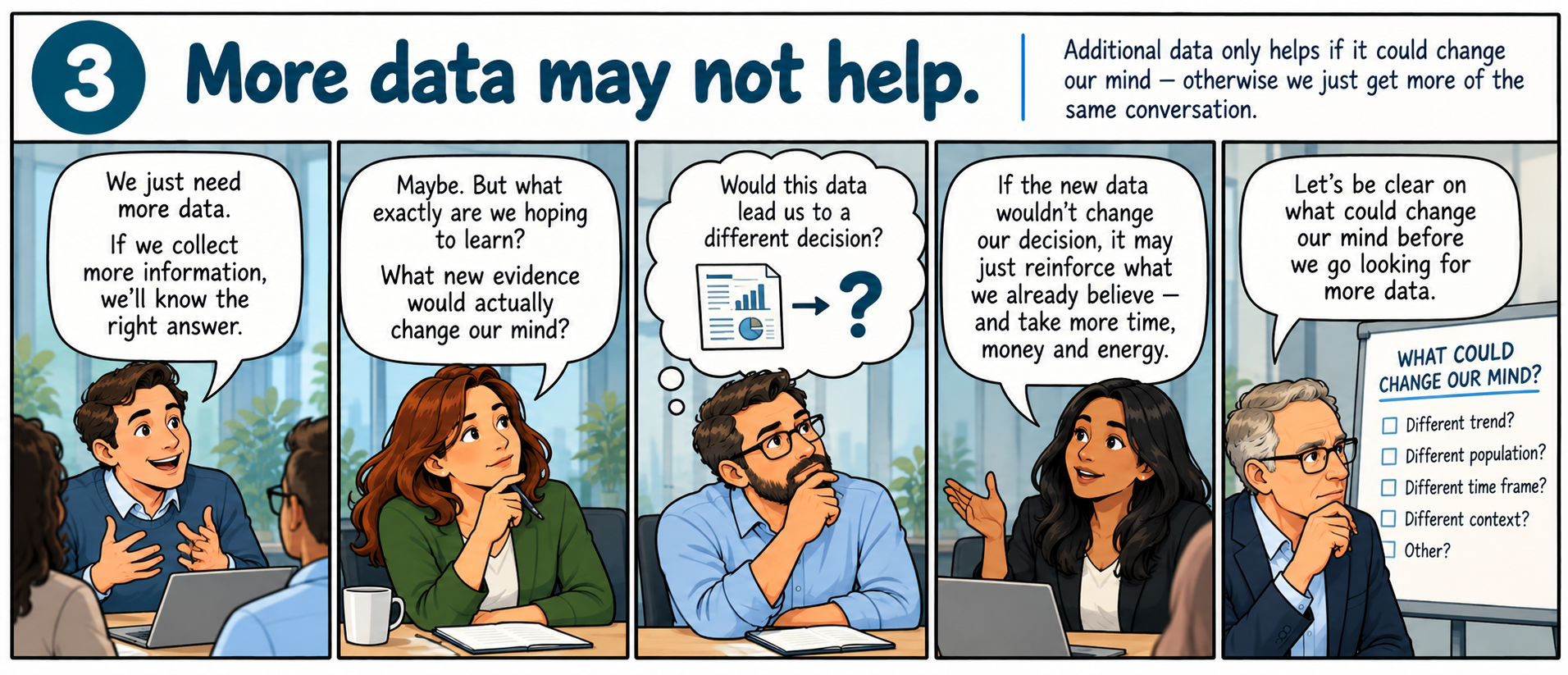
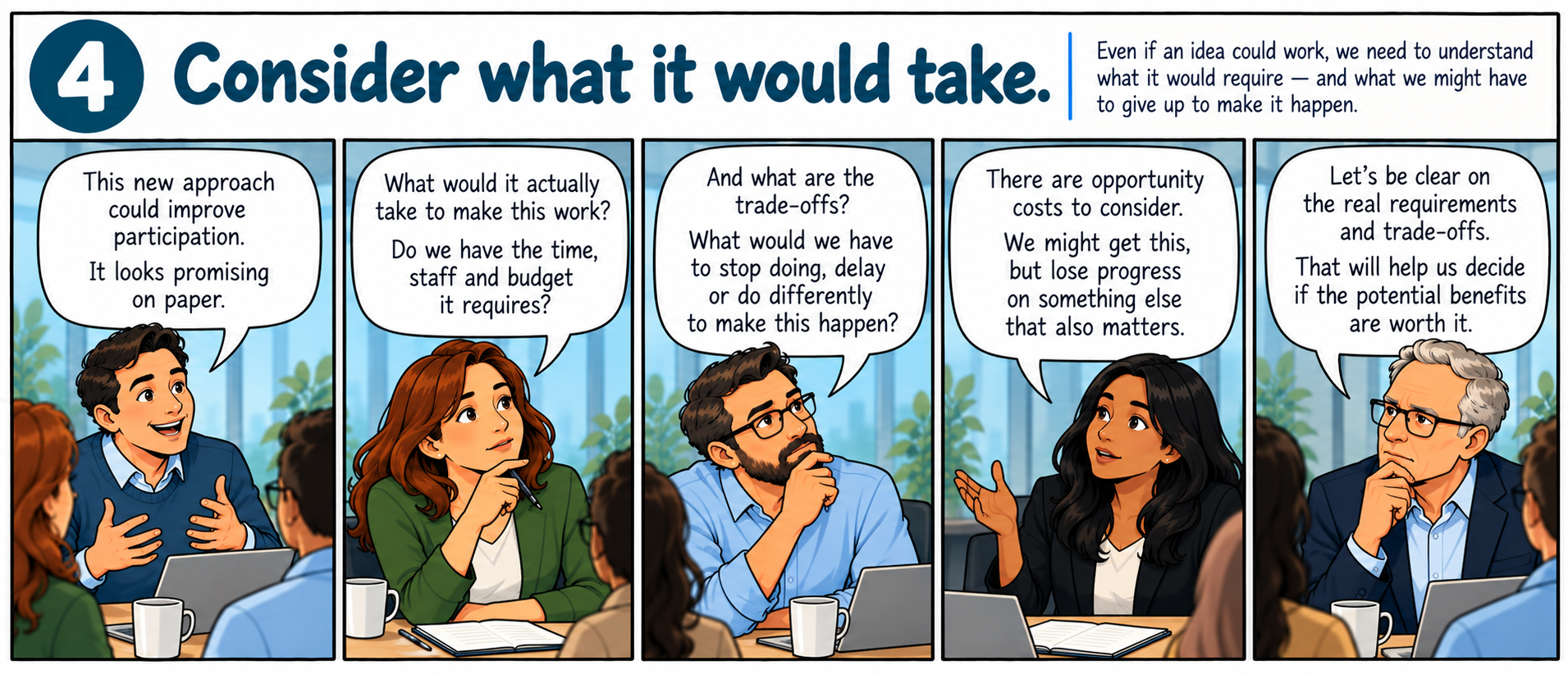
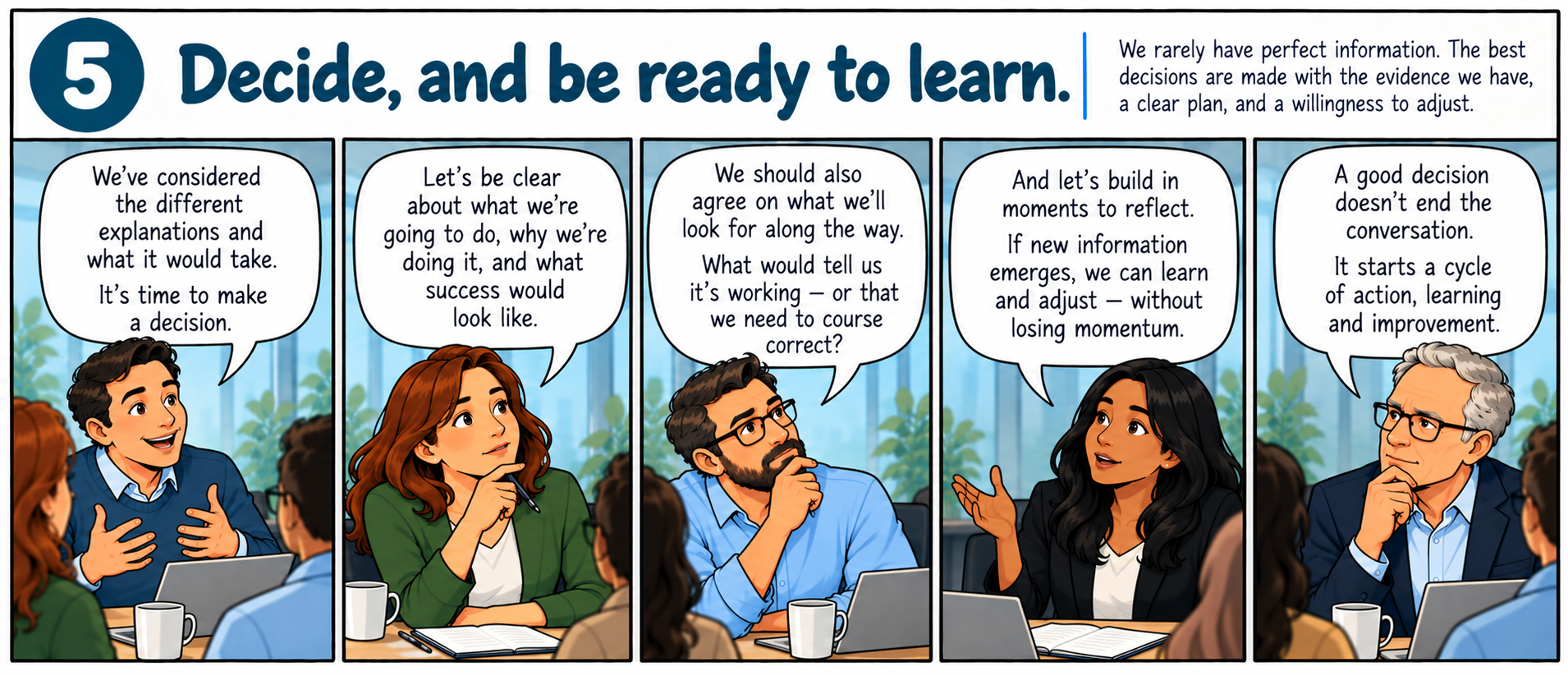
These are small interventions, but they change the quality of a conversation. They help people slow the jump from evidence to explanation, expose assumptions that matter, decide what additional evidence would actually be useful, recognize trade-offs, and make decisions while remaining ready to learn.
Sometimes, you may be responsible for developing the recommendation. Other times, you might be in the position of evaluating recommendations. The reasoning challenge exists in both roles.
People developing recommendations need to distinguish evidence from interpretation, test explanations, surface consequential assumptions and make their reasoning visible. People evaluating recommendations need to know where to look, what to question and how much confidence the reasoning deserves.
EIOR gives both groups a practical language for doing that work together.
EIOR isn't a course in statistics, analytics or formulas. Participants work through realistic situations where the evidence is useful but imperfect, reasonable people can disagree, and judgment still matters. They practise asking better questions, examining whether evidence is sufficient, testing assumptions and competing explanations, and tracing the path from evidence toward a defensible recommendation.
The objective isn't to remove judgment. It is to make better judgment possible.
EIOR is available as a full-day learning experience or as two connected half-day sessions. It can support leaders, managers, professional staff, analysts, advisors, boards and teams whose work involves developing, evaluating or acting on recommendations.
Where might stronger reasoning change a decision in your organization?
When you work with Guiding Star, you ignite real transformation — in your people, your teams, and your impact. Let's spark light, warmth, and lasting excellence for your customers, donors, and stakeholders.
Reach out today. Let's build something brilliant together.
.png)